Sled Surfers
- 4.4
- Rating
- 10.00M
- Installs
- Free
- Price

 Analysis by App-foxy
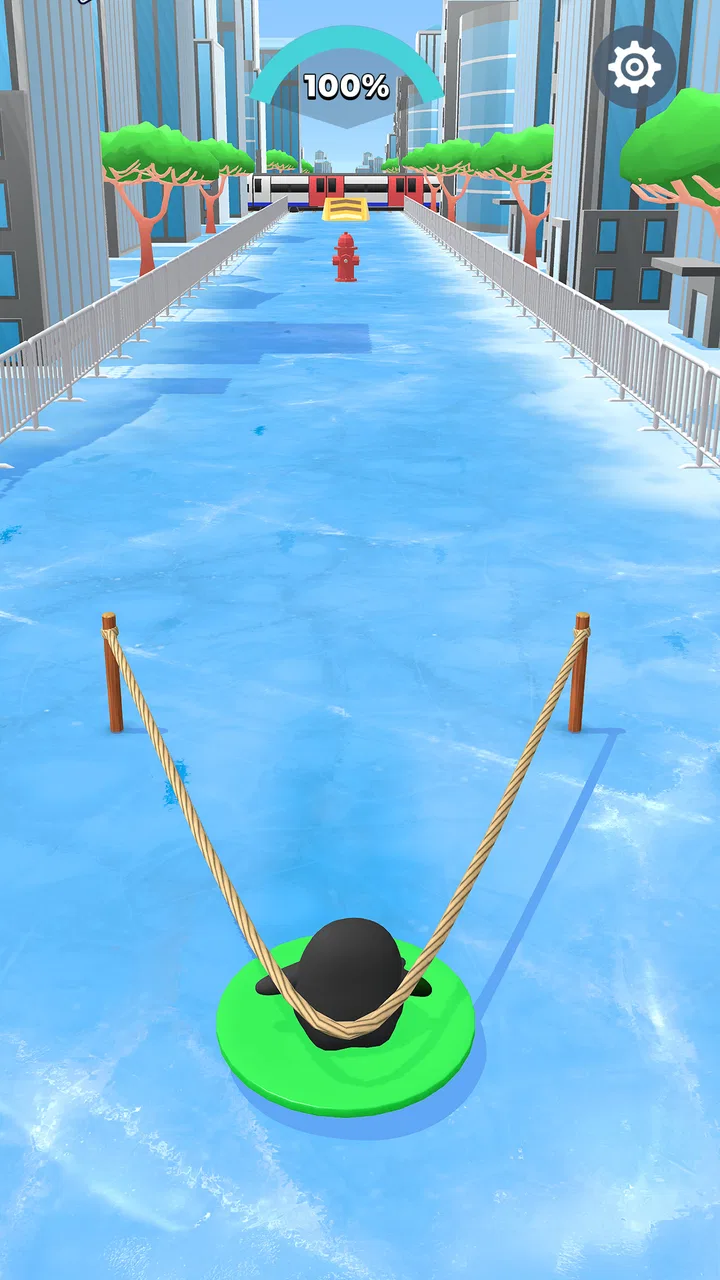
I approached Sled Surfers expecting a quick arcade distraction, and that is exactly where it works best. It puts me on snowy, icy slopes and asks me to react quickly, avoid hazards, and keep the run moving. The basic idea is easy to understand within seconds, but the difference between a short attempt and a satisfying run comes from learning when to move, when to stay centered, and when not to chase every tempting opening.
That balance makes it a good fit for short sessions. I can play while waiting for an appointment, take a few runs during a break, or settle into a longer session when I want something uncomplicated. It is free to download, although optional in-app purchases range from $1.99 to $24.99 per item. I would not treat it as a deep simulation or a story-driven adventure; its appeal is the immediate rhythm of steering, dodging, and trying again.
How the basic run feels in everyday play
The first thing I noticed is how quickly the game gets to its central action. There is no need to learn a complicated rule set before playing. I am placed into a downhill arcade challenge, and the snowy setting gives every decision a clear purpose: find a safe line, avoid the obstacle ahead, and keep enough control to handle what appears next.
You May Also Like

 Blood Strike: 2.5 Anniversary
Blood Strike’s Loadouts Turn Every Drop Into a Tactical Gamble
A close look at Blood Strike’s custom loadouts: how fast access to signature weapons reshapes its battle royale rhythm, rewards preparation, and narrows the gap between fights.

 Pandora - Music & Podcasts
Pandora’s Music Is Easy to Start, but Harder to Recover
Pandora’s strength is its low-effort path from a seed to a station. Its weak spot is how much confidence it asks you to place in connection, setup, and quiet recovery.

 8 Ball Pool
 Is Built on Rivalries, Rematches, and Routine
A close look at the rivalries, rematches, shared routines, and unanswered safety questions that turn a quick pool match into a persistent mobile community.

 Samsung Music
’s Quiet Strength Is Playing What You Already Own
Its reach comes less from spectacle than from dependable access to a personal library. That simplicity is both the app’s strongest retention engine and its ceiling.

 AccuWeather: Weather Radar
AccuWeather Review: A Quick, Clear Forecast for Everyday Decisions
For everyday plans, the best forecast is the one you can understand quickly. AccuWeather makes rain timing, radar, and local conditions easy to act on, with a few trade-offs.

 Hill Climb Racing
Why Hill Climb Racing Still Turns Crashes Into One More Run
A tiny car, a bumpy hill and one more upgrade: Hill Climb Racing keeps resurfacing because its simple chaos makes every near-miss feel personal.
More From Our News Desk
View All News


My usual workflow is simple. I begin with a calm first run rather than trying to set a personal best immediately. That lets me notice how quickly the course changes, which obstacles are easiest to misread, and whether I am reacting too late because I am watching the character instead of the path. After that, I use the next attempts to correct one mistake at a time. This is more effective than making several hurried changes at once.
That repeatable approach is especially useful because arcade games can encourage careless retries. When a run ends, it is tempting to restart immediately and repeat the same movement with slightly more speed. I get better results by identifying the exact moment that caused the failure. Was I already too far to one side? Did I move because I saw an obstacle, even though the safer route was to maintain my line? Treating each attempt as a small experiment gives the game more staying power.
A realistic use case is a short commute or a few minutes before bed. I can complete several attempts without needing to remember a complicated objective. The game is also approachable for someone who does not usually play arcade titles, since the snowy course communicates the challenge visually. However, a player looking for a slow, relaxing winter game may be surprised by how much attention the downhill movement demands.
The controls and course design are best understood through repetition. Rather than waiting until an obstacle fills the screen, I try to read the next section early and choose a direction before panic sets in. This habit makes the action feel less random. It also reveals an important trade-off: moving early can create safety, but moving too early can place me in a poor position for the following obstacle.
I would recommend starting with deliberate movements instead of constant corrections. Small adjustments preserve a better line and leave more room to respond. Large, late movements may save a single moment, but they often create a second problem immediately afterward. That is one of the first useful lessons I took from the game: survival is not only about avoiding the obstacle directly ahead; it is about preserving options for the next few seconds.
Settings I would check before chasing better runs
Before settling into serious play, I would look through the available settings and make sure the control behavior feels comfortable. I am not assuming that every device or installation presents the same layout, so I would check the actual menus on the phone rather than relying on a guide made for another version. The current version is 1.7.2, and small interface details can matter more than people expect in a fast arcade game.
The first practical check is control comfort. If the game offers more than one way to steer, I would test each option during low-pressure attempts and choose the one that lets me make short, confident corrections. A control method that feels exciting for a minute may become tiring during repeated runs. The best choice is the one that keeps my thumb or finger from covering the part of the screen where I need to read the slope.
I would also check sound before playing in public. Audio can make an arcade game feel more responsive, but it is not always practical on a bus, in a waiting room, or beside someone who is sleeping. If the game allows separate sound adjustments, I would keep useful effects audible while reducing anything distracting. If I am playing without sound, I compensate by watching the course more carefully instead of expecting audio to warn me about danger.
Screen visibility is another overlooked factor. Brightness, glare, and fingerprints can make icy surfaces harder to read, especially outdoors. I prefer to clean the screen and avoid playing with the display so dim that obstacles blend into the background. This is not a glamorous tip, but it can prevent mistakes that feel like control problems when the real issue is visibility.
I would not change settings repeatedly between every attempt. That interrupts the learning cycle and makes it harder to tell whether improvement came from a better habit or from a temporary adjustment. I make one change, play several runs, and then decide whether it genuinely helps. This is a more reliable way to find a comfortable setup than switching options after every failure.
The game is rated for Everyone, which supports its accessible presentation. Even so, accessibility in practice depends on the individual player. Someone with limited finger movement, sensitivity to rapid motion, or difficulty distinguishing similar colors should test the controls and visual clarity personally. The simple rules help, but they do not guarantee that every player will find the pace comfortable.
Faster patterns that make each attempt more useful
Once I understand the basic workflow, I stop treating every run as a contest against speed alone. The faster pattern is to make fewer desperate decisions. I scan ahead, identify the safest broad route, and avoid drifting toward a side merely because it looks open for one moment. An opening is valuable only if it leaves me prepared for what follows.
One habit that helped me was separating reaction from planning. I react to an obstacle that is already unavoidable, but I plan around the next section before reaching it. That small distinction reduces frantic movement. It also makes the game feel more skill-based, because I am no longer waiting for every hazard to become an emergency.
Another useful pattern is to use the center of the course as a reference rather than as a permanent destination. Staying central can provide flexibility, but it is not automatically safest. If an obstacle blocks the middle, remaining there out of habit is worse than moving early to a clear side. I use the center to judge my position, then choose the route that gives me the most room for the next correction.
I also recommend learning from successful runs, not only failed ones. When I survive a difficult section, I try to remember what made it work: the timing of the movement, the amount of space left afterward, and whether I was already preparing for the next change. This turns a lucky escape into a repeatable technique. Without that pause, it is easy to celebrate a good run without understanding why it succeeded.
For players who want a more efficient routine, I would divide sessions into two types. In a learning session, I focus on one section or one recurring mistake and accept lower results while testing a new approach. In a score-focused session, I use the habit that already feels reliable and avoid experimenting when the run is going well. Mixing those goals in every attempt can make progress feel inconsistent.
Short sessions are particularly effective for this style of game. After too many retries, I notice that my movements become impatient and I start blaming the course for errors caused by fatigue. Taking a break after a few poor attempts often helps more than forcing another restart. The game is free and easy to return to, so there is little reason to turn a quick arcade challenge into a frustrating endurance test.
The developer, CrazyLabs LTD, has positioned this as an accessible arcade experience rather than a demanding technical game. That makes it easy to recommend to casual players, families, and anyone who enjoys improving through repetition. It is less suitable for someone who needs a large progression system, detailed customization, or a strong narrative reason to continue playing.
Where experienced play reaches its limits
There is a ceiling to what careful habits can solve. Better timing and route selection improve consistency, but they do not transform the game into a complex strategy title. The core loop remains focused on downhill movement, obstacle avoidance, and repeated attempts. If I want deep character development, elaborate missions, or a broad competitive structure, I would look elsewhere in the arcade and action categories.
The free entry point is convenient, but the presence of in-app purchases is worth keeping in mind. I would play the opening sessions without buying anything and first decide whether the basic loop holds my attention. Optional purchases can be reasonable for players who already know they enjoy the game, but they should not be treated as necessary before the controls and challenge have had a fair test.
That advice matters because arcade repetition can create a strong urge to improve immediately. When a run ends just short of a satisfying result, purchasing something may feel like the quickest solution, even though the real issue is often timing. I prefer to separate spending decisions from frustration. If I still value the game after several calm sessions, I can make a more informed choice.
Device compatibility is also straightforward but not universal. The game supports Android 7.0 and later, so anyone using an older Android device should check compatibility before planning to play. On supported hardware, the more important practical questions are comfort, screen responsiveness, and whether the device is pleasant to hold during repeated runs. Those factors affect performance more directly than the simple premise might suggest.
The audience size gives the game some reassurance: it has passed 500 thousand installs, with an average rating of 4.3 from around 15 thousand ratings. I read that as evidence of broad appeal rather than proof that every player will enjoy it. The rating fits my impression of a polished, easy-to-start arcade game, but players who dislike repetition or quick visual decisions may still find it limited.
Its Everyone age rating makes it a reasonable choice for shared casual play, although I would still supervise younger players if purchases are enabled on the device. The main concern is not the rules of the game but the ease with which repeated attempts can encourage impulsive decisions. Setting a clear play or spending boundary is sensible for any free arcade title with optional purchases.
Compared with a traditional endless runner, the snowy slope gives this game a distinct identity, but the decision-making remains familiar: read the route, move at the right moment, and restart after a mistake. Compared with a slower puzzle game, it offers faster feedback and less planning time. Compared with a full racing game, it is much lighter and more immediate, but it also gives me less control over the wider racing experience. The right alternative depends on whether I want quick reactions or deeper systems.
Who should play it and who should skip it
I think Sled Surfers is a strong match for players who enjoy compact arcade sessions and like the feeling of improving through small corrections. It is particularly suitable for someone who wants a game that can be understood immediately but still rewards attention. A parent looking for an approachable game for a short shared session may appreciate the simple objective, while a regular arcade player can focus on cleaner lines and more consistent decisions.
I would be more cautious about recommending it to players who need a clear long-term progression path. If your favorite games are built around collecting, story chapters, elaborate upgrades, or extensive customization, the central downhill loop may feel too narrow. It is also not my first choice for someone seeking a calm background game, because avoiding obstacles requires active concentration.
For a new player, my practical recommendation is to spend the first few attempts learning movement rather than chasing distance. Keep the screen clear, choose comfortable controls, and watch how one decision affects the next section. When a run fails, name the mistake in plain language before restarting. “Moved too late” is useful; “the game cheated” is not, even when the failure feels unfair.
For an experienced player, the next step is consistency. Use repeatable starting habits, make early route decisions, and avoid unnecessary side-to-side movement. If a particular section repeatedly causes trouble, practice the decision that happens before the obstacle appears. The most valuable improvement often occurs one moment earlier than the visible mistake.
My final view after settling into the rhythm
The best reason to try Sled Surfers is its clean arcade loop: quick to learn, easy to replay, and more demanding than its simple presentation first suggests. I like that it does not require a long explanation before the action begins. I can pick it up for a few minutes, make progress through better timing, and put it down without losing a complicated thread.
Its limitations are just as clear. The game is not designed to replace a deep racing title, a story-heavy adventure, or a thoughtful puzzle game. The repeated downhill format may eventually feel familiar, and optional purchases mean I would approach it with sensible spending boundaries. Those are not deal-breakers for me, but they define the kind of player who will get the most from it.
Released on April 29, 2025, and available free of charge, it has a low barrier to entry for Android players on supported devices. The broad Everyone rating, current version 1.7.2, and reception from its growing player base all fit its role as an accessible arcade game. I would install it when I want short, focused sessions rather than a large commitment.
My recommendation is simple: give it a fair trial, but judge it by the quality of its moment-to-moment play rather than by expectations of a full racing package. If you enjoy learning routes, correcting late movements, and turning quick reactions into reliable habits, Sled Surfers can be a satisfying little time-filler. If you want extensive systems or a quiet, low-attention experience, another category will probably serve you better.
FAQs for Sled Surfers
01What is the main objective of Sled Surfers?
Sled Surfers is an exhilarating endless runner game where players race down snowy slopes on a sled. The main objective is to collect as many coins as possible while avoiding obstacles and performing tricks to increase your score. The game challenges your reflexes and strategic planning to navigate different terrains and unlock new levels.
02Are there any in-app purchases in Sled Surfers?
Yes, Sled Surfers offers in-app purchases that allow players to buy coins, unlock special sleds, and acquire power-ups. These purchases enhance gameplay by providing additional customization options and boosting abilities, though they are not necessary to progress in the game. Players can enjoy the full experience without spending money.
03What platforms is Sled Surfers available on?
Sled Surfers is available on both Android and iOS platforms. You can download the game from the Google Play Store for Android devices and the Apple App Store for iOS devices. The game is optimized for a smooth experience on both smartphones and tablets, providing flexibility in how you choose to play.
04Does Sled Surfers require an internet connection to play?
No, Sled Surfers does not require a constant internet connection to play. You can enjoy the game offline, making it perfect for on-the-go entertainment. However, an internet connection is necessary for downloading updates, accessing online leaderboards, and making in-app purchases.
05How often is Sled Surfers updated with new content?
Sled Surfers receives regular updates that introduce new levels, sleds, and features to keep the gameplay fresh and exciting. These updates are based on player feedback and aim to enhance the overall gaming experience. It’s recommended to keep the app updated to enjoy the latest content and improvements.
Pros
- Engaging graphics and smooth animations.
- Accessible controls for all skill levels.
- Diverse levels with increasing challenges.
- Regular updates with new content.
- Offline mode for uninterrupted play.
Cons
- In-app purchases can be expensive.
- Occasional ads interrupt gameplay.
- Requires frequent updates for best performance.
- Limited social features for sharing progress.
- Battery consumption is relatively high.

Sled Surfers
Gallery